
How to Get a Loan Approved — Even With a Low Credit Score
Having a low credit score can feel like a financial prison, limiting your access to loans when you need them most. Whether you're facing an emergency expense, trying to consolidate debt, or pursuing an important life goal, being denied credit due to poor credit history creates stress and frustration. The reality is that millions of Americans have credit scores below 670, and traditional lenders often reject their applications automatically. However, a low credit score doesn't mean you're out of options—there are proven strategies and alternative lending solutions that can help you secure loan approval even with damaged or limited credit history.
1. Understand Your Credit Score and What Lenders See
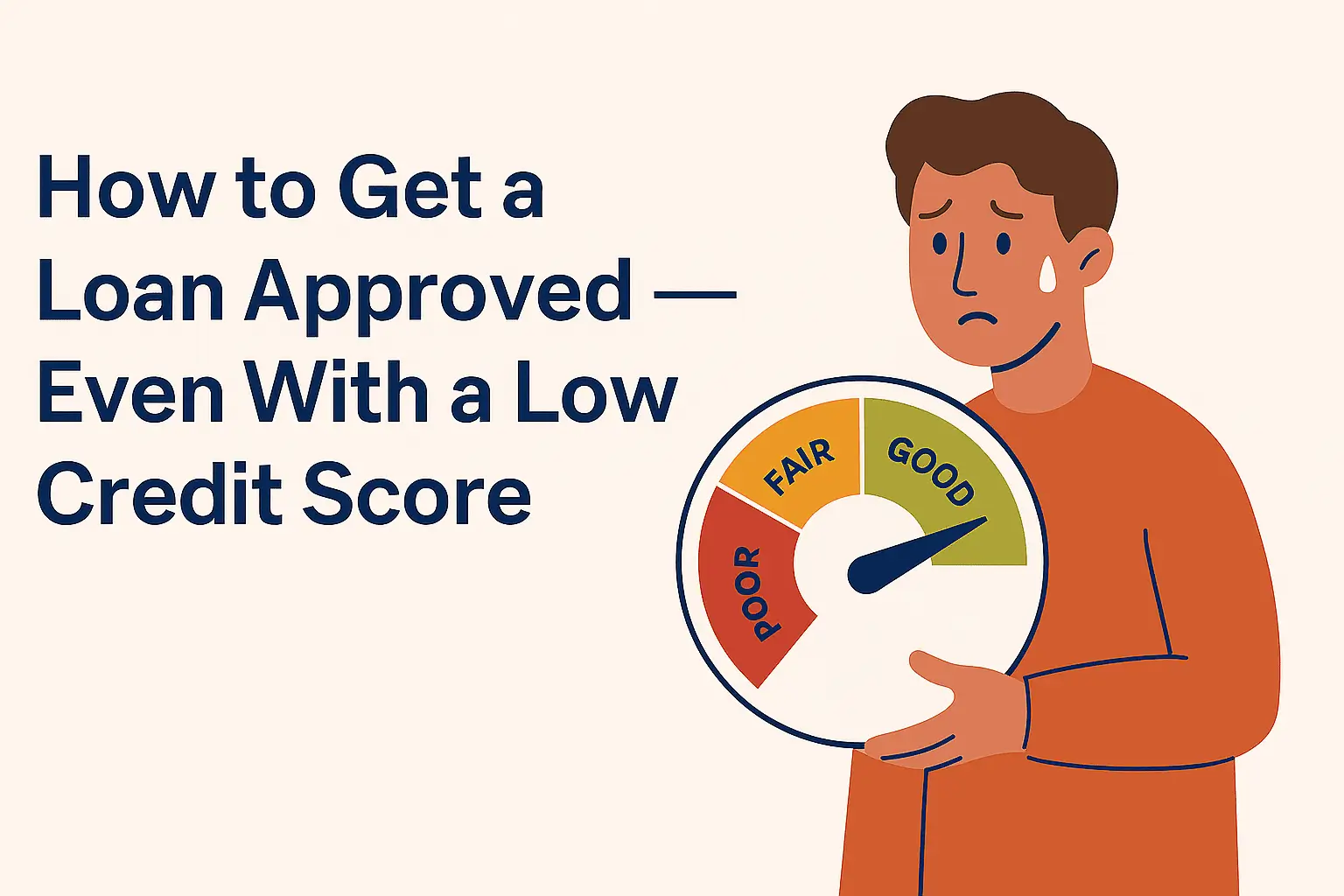
Before applying for any loan, you need to understand exactly what's in your credit report and how lenders evaluate your creditworthiness. Your credit score is a three-digit number ranging from 300 to 850 that summarizes your credit history and predicts the likelihood you'll repay borrowed money. FICO scores below 580 are considered poor, scores between 580-669 are fair, and anything above 670 is generally considered good credit. However, your credit score is just one factor—lenders also examine your entire credit report for payment history, credit utilization, length of credit history, and types of credit accounts.
Obtain free copies of your credit reports from all three major credit bureaus—Equifax, Experian, and TransUnion—through AnnualCreditReport.com. Review these reports carefully for errors, which appear on approximately one in five credit reports according to Federal Trade Commission studies. Common errors include accounts that don't belong to you, incorrect payment statuses, outdated negative information, and duplicate accounts. Disputing inaccurate information can boost your score relatively quickly, sometimes by 50 points or more.
Understanding the specific reasons for your low credit score helps you address weaknesses strategically. If late payments are the primary issue, demonstrating recent on-time payment history becomes crucial. If high credit card balances are the problem, paying down revolving debt should be your priority. If you have limited credit history rather than bad credit, strategies like becoming an authorized user or applying for a secured credit card can build your profile. Knowledge of your credit situation empowers you to present the strongest possible application and choose lenders most likely to approve borrowers with your specific credit profile.
2. Take Quick Actions to Improve Your Score Before Applying
Even small improvements to your credit score can make the difference between loan approval and rejection, and several strategies can boost your score within weeks or months. While comprehensive credit repair takes time, tactical actions before applying for a loan can shift your application from the rejection pile to the approval stack. The key is focusing on factors that have immediate impact while laying groundwork for long-term credit health.
Pay down credit card balances to reduce your credit utilization ratio—the percentage of available credit you're using. Credit utilization accounts for approximately thirty percent of your FICO score, making it one of the most impactful factors you can control quickly. Aim to reduce utilization below thirty percent on individual cards and across all cards combined, with utilization below ten percent being ideal. Even if you can't pay balances in full, reducing them by several hundred dollars can improve your score within one billing cycle.
Request credit limit increases on existing cards to immediately lower your utilization ratio without paying down balances. Many credit card issuers allow online requests that are processed within minutes. Becoming an authorized user on someone else's credit card with good payment history and low utilization can also boost your score, as the positive account history may be added to your credit report. Additionally, pay all bills on time for at least three to six months before applying, as recent payment history carries significant weight. Set up automatic payments for minimum amounts to ensure you never miss due dates, then manually pay additional amounts when possible.
3. Explore Alternative Lenders and Bad Credit Loan Options
Traditional banks and credit unions often have strict credit score requirements, but the lending landscape has expanded dramatically with online lenders, fintech companies, and specialized bad credit lenders who use alternative underwriting methods. These lenders look beyond credit scores to evaluate factors like income, employment history, education, and banking behavior, making approval possible even with scores in the 500s or lower.
Online personal loan marketplaces like LendingClub, Upstart, and Avant specialize in serving borrowers with fair to poor credit. These platforms use sophisticated algorithms that consider variables traditional lenders ignore, potentially offering approval when banks won't. Peer-to-peer lending platforms connect borrowers directly with individual investors willing to fund loans for higher-risk applicants in exchange for higher returns. Credit unions often have more flexible lending criteria than banks and may offer payday alternative loans (PALs) with better terms than predatory lenders.
Be cautious when exploring bad credit loan options, as higher-risk lending often comes with higher interest rates and fees. Compare annual percentage rates (APR), origination fees, prepayment penalties, and total loan costs across multiple lenders. Avoid predatory lenders offering guaranteed approval with no credit check—these often come with astronomical interest rates exceeding 100 percent APR. Legitimate lenders will check your credit and evaluate your ability to repay, even if they have lenient approval criteria. Research lender reputation through Better Business Bureau ratings, Consumer Financial Protection Bureau complaints, and independent reviews before submitting personal information.
4. Consider Secured Loans With Collateral
Secured loans require collateral—assets that the lender can seize if you default—making them significantly easier to obtain with bad credit. By providing security for the loan, you reduce the lender's risk, which translates to higher approval odds and often lower interest rates compared to unsecured bad credit loans. Collateral essentially allows your assets to speak for you when your credit score cannot.
Common secured loan types include auto loans (secured by the vehicle), home equity loans and lines of credit (secured by your property), secured personal loans (secured by savings accounts, certificates of deposit, or other assets), and title loans (secured by vehicle titles, though these should be approached with extreme caution due to predatory terms). Secured credit cards, where you deposit cash as collateral, help build credit while providing access to revolving credit.
When considering secured loans, carefully evaluate the risks. Defaulting means losing your collateral, which could be your car, home, or savings. Only borrow amounts you're confident you can repay, and ensure monthly payments fit comfortably within your budget with room for unexpected expenses. Create a backup repayment plan in case your income is disrupted. For home equity products, remember that putting your home at risk should be reserved for truly necessary borrowing, not discretionary spending. Despite the risks, secured loans provide a legitimate path to needed funds while rebuilding credit when used responsibly.
5. Find a Cosigner or Co-Borrower
Adding a creditworthy cosigner to your loan application dramatically improves approval chances and often secures better interest rates, even with your low credit score. A cosigner with good credit essentially lends you their creditworthiness, promising to repay the loan if you default. Lenders evaluate the cosigner's credit and income alongside yours, giving significant weight to their stronger financial profile when making approval decisions.
Potential cosigners include parents, siblings, spouses, other relatives, or close friends with established credit and stable income. The ideal cosigner has a credit score above 700, low debt-to-income ratio, and sufficient income to cover the loan payments if necessary. Approach potential cosigners thoughtfully, explaining why you need the loan, how you plan to repay it, and acknowledging the responsibility they're undertaking. Be transparent about your financial situation and credit challenges—honesty builds trust and helps them make informed decisions.
Understand that cosigning carries serious implications for both parties. The loan appears on both credit reports, affecting both credit scores based on payment history. Late payments or default damage the cosigner's credit and may strain or destroy relationships. Some lenders allow cosigner release after establishing consistent on-time payments for a specified period, typically twelve to twenty-four months, though this feature isn't universal. If someone agrees to cosign, treat it as a sacred obligation—their willingness to help represents significant trust and financial risk. Set up automatic payments, communicate proactively if issues arise, and prioritize this debt to protect both your relationship and their financial wellbeing.
6. Demonstrate Strong Income and Employment Stability
When credit scores are lacking, proving robust income and stable employment becomes even more critical for loan approval. Many alternative lenders focus heavily on your ability to repay based on current income rather than past credit mistakes. Demonstrating consistent earnings, steady employment, and manageable debt-to-income ratio can overcome credit score deficiencies and convince lenders you're a worthwhile risk despite your credit history.
Gather comprehensive documentation proving your income and employment: recent pay stubs covering at least two months, tax returns from the past two years, W-2 forms, bank statements showing regular deposits, and employment verification letters. Self-employed borrowers should prepare additional documentation including profit and loss statements, business bank account statements, and potentially a certified public accountant letter verifying income. The more evidence you provide, the more confidence you instill in lenders regarding your repayment capacity.
Calculate your debt-to-income ratio (DTI)—total monthly debt payments divided by gross monthly income. Most lenders prefer DTI below forty-three percent, though some accept higher ratios for borrowers with compensating factors. If your DTI is high, consider paying off smaller debts before applying or applying for a smaller loan amount. Highlight employment stability by emphasizing years with your current employer or in your industry. Career progression, professional licenses, or specialized skills that ensure continued employability strengthen your application. Some lenders even consider future earning potential for recent graduates or those in high-demand fields, particularly when evaluating student loan refinancing applications.
7. Apply for Smaller Loan Amounts
Requesting smaller loan amounts significantly increases approval likelihood with bad credit because you're asking lenders to take less risk. A five thousand dollar loan is easier to approve than a twenty-five thousand dollar loan when your credit score raises red flags. Starting with a smaller loan also demonstrates your ability to manage debt responsibly, creating a foundation for accessing larger amounts in the future as you rebuild credit.
Carefully calculate the minimum amount you actually need rather than the maximum you want. Break down your expenses or project costs in detail, eliminating nice-to-have items and focusing exclusively on necessities. For debt consolidation, consider consolidating only high-interest debt rather than all outstanding balances. For home improvements, phase projects over time rather than funding everything at once. For emergencies, distinguish between truly urgent expenses and those that can wait until your financial situation improves.
Smaller loans offer additional advantages beyond easier approval. Monthly payments are more manageable, reducing default risk and protecting your improving credit score. You'll pay less total interest over the loan term. Shorter repayment periods often accompany smaller balances, allowing you to become debt-free faster. Successfully repaying a small loan establishes positive payment history that benefits future applications. Consider this a stepping stone strategy—secure approval for what you need now while building the credit profile that will unlock better terms and larger amounts later.
8. Use Credit Builder Loans and Alternative Products
Credit builder loans represent a unique financial product specifically designed to help people with poor credit or no credit history establish positive payment records while saving money. Unlike traditional loans where you receive funds upfront, credit builder loans hold the borrowed amount in a savings account while you make monthly payments. Once you've completed all payments, you receive the saved amount. This structure minimizes lender risk while helping you build credit and savings simultaneously.
Many credit unions, community banks, and online lenders offer credit builder loans ranging from three hundred to three thousand dollars with terms of six to twenty-four months. Payments are reported to all three credit bureaus, creating positive payment history that boosts your credit score. Some programs report the full loan amount as an installment loan, while others report only as payments are made. Interest rates and fees vary but are generally reasonable compared to other bad credit lending options. Look for products with low fees, flexible payment schedules, and verified reporting to all major credit bureaus.
Alternative credit building products expand your options further. Secured credit cards require a refundable security deposit but function like regular credit cards and report to credit bureaus. Authorized user arrangements let you benefit from someone else's positive credit account without liability for payments. Rent reporting services like Rental Kharma and RentTrack report your on-time rent payments to credit bureaus, converting housing costs into credit-building activity. Buy now, pay later services increasingly report to credit bureaus, allowing responsible use of payment plans to demonstrate creditworthiness. Combining multiple credit building strategies accelerates score improvement and creates a more robust credit profile that appeals to future lenders.
9. Avoid Common Mistakes That Hurt Your Approval Chances
Even when implementing smart strategies, certain mistakes can sabotage your loan approval chances or result in worse terms than necessary. Understanding and avoiding these pitfalls protects your application and maximizes your success probability. Small oversights often have disproportionate consequences when you're already working with credit disadvantages.
Never submit multiple loan applications simultaneously or within a short timeframe. Each application typically generates a hard inquiry on your credit report, temporarily lowering your score by several points. Multiple inquiries signal desperation to lenders and suggest you may be overextending yourself financially. Instead, use pre-qualification tools that perform soft credit checks without affecting your score, then submit formal applications only to your most promising options. Many lenders and loan marketplaces offer pre-qualification that provides estimated rates and approval likelihood without hard inquiries.
Avoid providing false or exaggerated information on applications. Overstating income, understating debts, or providing inaccurate employment details constitutes fraud and will result in immediate denial if discovered. Lenders verify information through pay stubs, tax returns, and credit reports—dishonesty will be caught. Be honest about negative items on your credit report; if asked about them, provide brief explanations demonstrating changed circumstances or lessons learned rather than making excuses.
Don't ignore your existing debts while pursuing new loans. Late payments that occur while you're applying will tank your approval chances as lenders see real-time evidence of financial distress. Continue making all minimum payments on time, even if you're struggling. If you cannot maintain current obligations, address that crisis before taking on additional debt—more borrowing won't solve underlying financial problems and will likely deepen your difficulties.
Finally, resist the temptation to work with lenders requiring upfront fees before loan approval or those guaranteeing approval without any credit verification. Legitimate lenders may charge origination fees deducted from loan proceeds, but they don't require payment before approving and funding your loan. Scammers prey on desperate borrowers with bad credit, collecting fees with no intention of providing loans. Verify lender legitimacy through state licensing databases, Better Business Bureau profiles, and independent reviews before sharing sensitive personal information or sending money.
Your Path to Loan Approval Despite Bad Credit
Securing loan approval with a low credit score requires strategy, preparation, and persistence, but it's absolutely achievable when you understand how to work with the lending system rather than against it. The nine strategies outlined above provide a comprehensive framework for improving your approval odds, from understanding your credit situation to avoiding common pitfalls that derail applications. Most successful borrowers combine multiple approaches—perhaps improving their score somewhat, finding a cosigner, and applying through alternative lenders specialized in bad credit loans.
Start by conducting honest assessment of your financial situation. Check your credit reports for errors and understand what's hurting your score. Calculate how much you truly need to borrow and whether you can realistically afford the monthly payments. Research lenders that serve your credit profile rather than applying randomly to institutions likely to reject you. Prepare thorough documentation proving your income, employment, and ability to repay. Consider whether secured loans, cosigners, or starting with smaller amounts make sense for your circumstances.
Remember that getting approved is only the beginning—successfully managing your new loan is what truly matters for your financial future. Make every payment on time without exception. Pay more than the minimum when possible to reduce interest costs and principal faster. Monitor your credit score monthly to track improvement as positive payment history accumulates. Use this loan as a stepping stone to better credit rather than viewing it as a permanent solution to credit challenges.
Most importantly, address the underlying issues that damaged your credit in the first place. Whether it was job loss, medical expenses, poor financial habits, or simply lack of credit experience, identify the root causes and implement changes to prevent recurring problems. Build an emergency fund so unexpected expenses don't force late payments. Create and follow a realistic budget. Develop better money management skills through financial literacy resources or credit counseling. The goal isn't just getting approved for this loan—it's building a financial foundation that eliminates the need for bad credit products in the future.
With determination and smart strategy, your low credit score is a temporary obstacle, not a permanent barrier. Take action today using these proven techniques, and you'll be surprised how quickly doors begin opening that previously seemed permanently closed. Your financial redemption story starts with a single approved loan and continues with every on-time payment that rebuilds your creditworthiness and unlocks better opportunities ahead.

